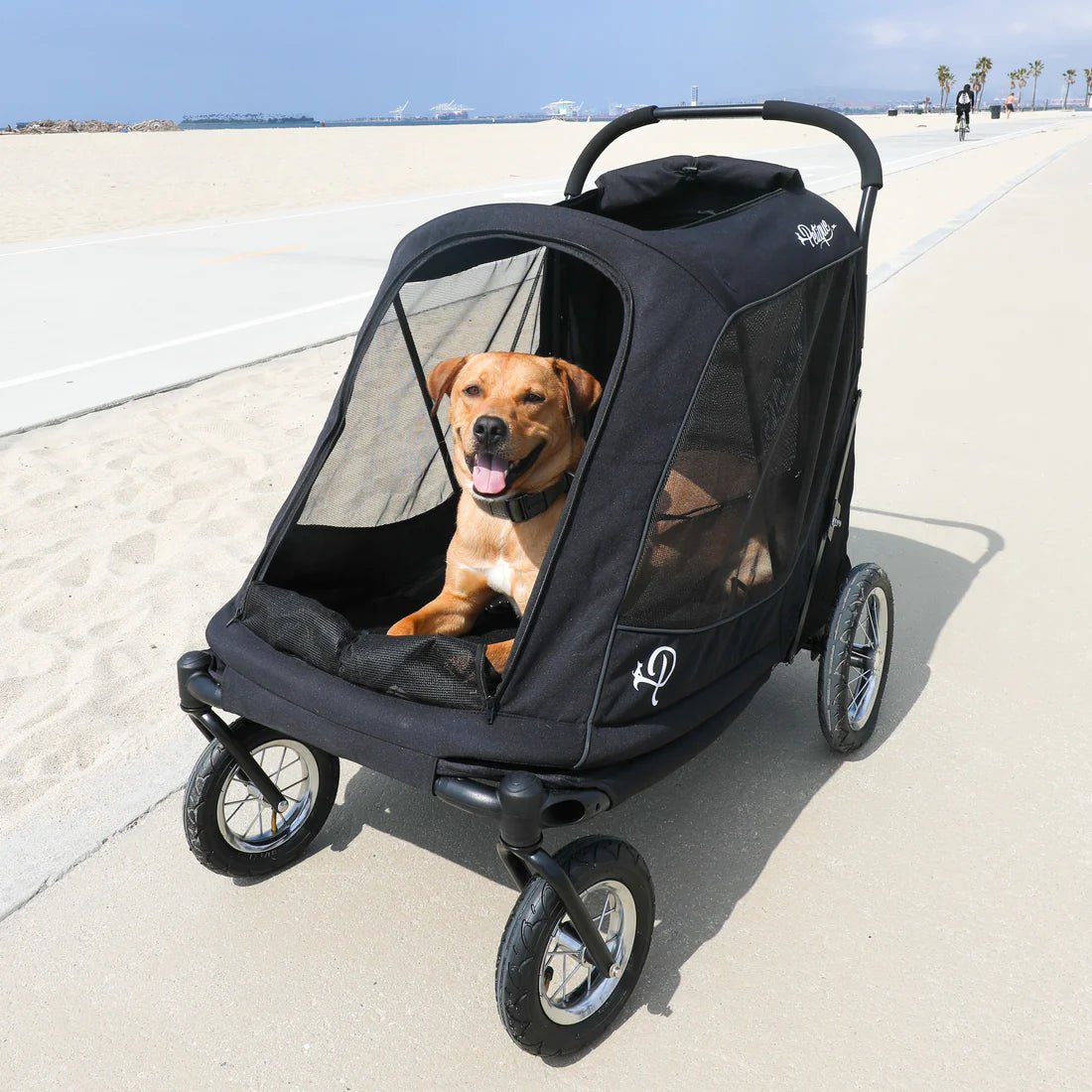
For many dog lovers, mobility issues creep in quietly. A limp after a long walk. Hesitation at the kerb. A dog who once bounded ahead now lags behind, eyes full of frustration. Arthritis, hip dysplasia, spinal injuries, neurological conditions and post-surgery recovery all change how a dog experiences the world. Yet for countless owners across the UK, one simple change has brought dignity, joy and freedom back into daily life: a dog stroller for dogs with mobility problems.
This is not about giving up on walking. It is about adapting so dogs can keep living fully.
Bella’s Story: From Sofa-Bound to Sunday Park Rituals
Bella, a 12-year-old Labrador, had always loved the outdoors. As arthritis worsened, her walks shortened to the end of the street. Her owner, Hannah, describes the change as heartbreaking.
“Bella would sit by the door when I picked up the lead, then look confused when we turned back so quickly. She wasn’t tired — she was in pain.”
After advice from their vet, Hannah invested in a stroller designed for medium-to-large dogs. At first, she worried about judgement. Instead, she noticed something else entirely.
“The first time I lifted Bella into the pram, she relaxed instantly. At the park, she sat upright, nose in the wind, tail wagging like it used to.”
Now, Bella walks short distances, rests in the stroller when needed, and still joins the family on longer outings. The pram for dogs with storage basket has even made practical life easier. Hannah stores medication, water, and a blanket underneath, reducing strain on her own back.
What Vets Say About Mobility Aids
Veterinary professionals increasingly support mobility aids when used appropriately. Dr James Houghton, a small animal vet with over 20 years’ experience, explains:
“Pain management isn’t just about medication. Controlled movement and mental stimulation are crucial for ageing or injured dogs. A well-designed stroller allows dogs to remain part of normal routines without overloading compromised joints.”
He emphasises that strollers are not replacements for exercise but tools for balance. Short, supported walks combined with rest prevent muscle wastage while protecting fragile joints.
Max’s Recovery: Injury Without Isolation
Max, a three-year-old Cockapoo, suffered a spinal injury after a fall. Post-surgery recovery meant weeks of limited movement. His owner, Rina, noticed an unexpected problem.
“Max became withdrawn. He wasn’t himself because he couldn’t come out with us.”
Using a dog stroller allowed Max to accompany his family safely while healing. Rina recalls the emotional shift.
“The moment he realised he was coming along again, his whole mood changed. He watched people, sniffed the air, and re-engaged with life.”
This mental stimulation, vets note, can be as important as physical recovery. Dogs deprived of social exposure often show anxiety or low mood, particularly active breeds.
Before and After: What Owners Consistently Notice
Across dozens of real-life experiences, similar patterns emerge:
Before
- Reluctance to move
- Visible discomfort or trembling
- Anxiety when left behind
- Weight gain due to reduced activity
After
- Increased alertness and engagement
- Improved appetite and sleep
- Better pain tolerance during short walks
- Stronger emotional bond with owners
These changes are not about luxury; they are about welfare.
Choosing the Right Stroller: Owner Tips That Matter
Owners who have walked this path share practical advice worth noting.
Size and support matter
A stroller should allow the dog to lie flat or sit upright comfortably. Adequate padding and harness attachments prevent shifting during movement.
Storage is not a gimmick
A pram for dogs with storage basket becomes invaluable on longer outings. Carrying water, cooling mats, treats, medications, and waste bags in one place keeps outings calm and organised.
Terrain awareness
Larger wheels handle pavements, parks, and uneven ground far better than compact travel wheels.
Gradual introduction
Let the dog explore the stroller at home first. Familiar bedding and calm praise help build positive associations.
Ruby’s Second Puppyhood
Ruby, a rescue Dachshund with chronic disc disease, had always lived cautiously. Her owner, Mark, never expected a stroller to change more than logistics.
“Ruby used to bark constantly when we went out. She was anxious about being left.”
With her stroller, Ruby attends café walks, school runs, and countryside strolls. Mark laughs softly when describing the change.
“She acts like a puppy again — alert, curious, calm. People smile at her, and she loves the attention.”
Emotional Freedom for Dogs and Humans Alike
Perhaps the most profound impact of a dog stroller for dogs with mobility problems is emotional. Owners speak openly about guilt, fear, and grief as dogs age or become injured. Being able to continue shared routines eases that emotional weight.
As one owner put it:
“It wasn’t about wheels. It was about not leaving my best friend behind.”
These stories highlight a quiet truth: mobility aids do not diminish a dog’s dignity. They restore it — one peaceful walk, curious sniff, and wagging tail at a time.